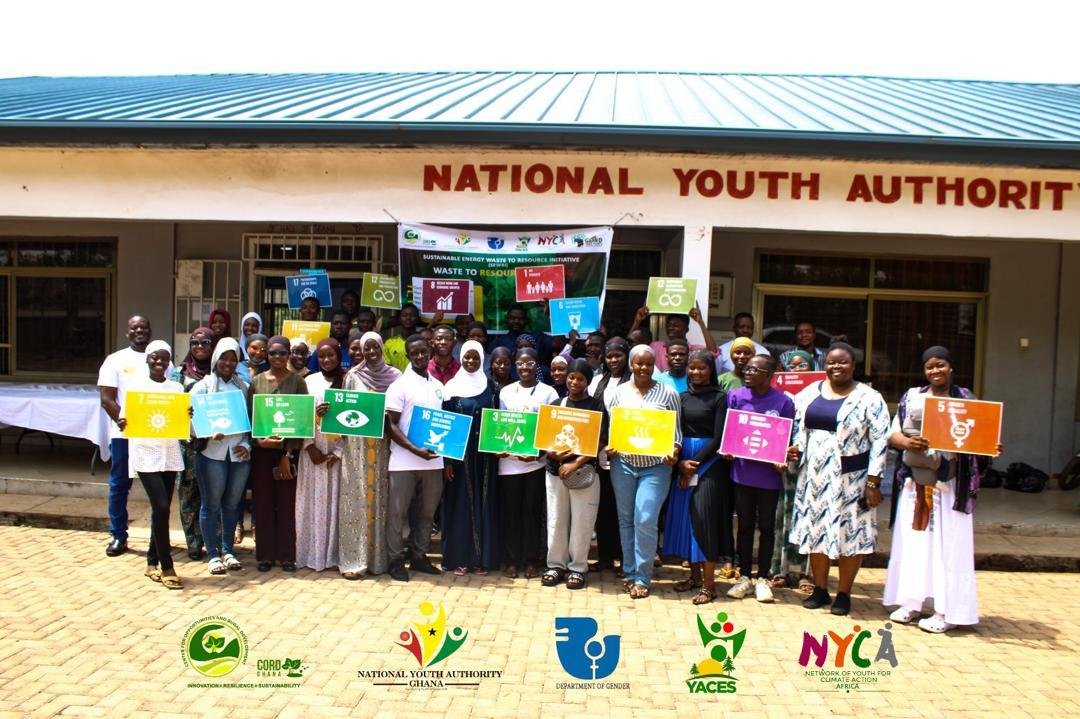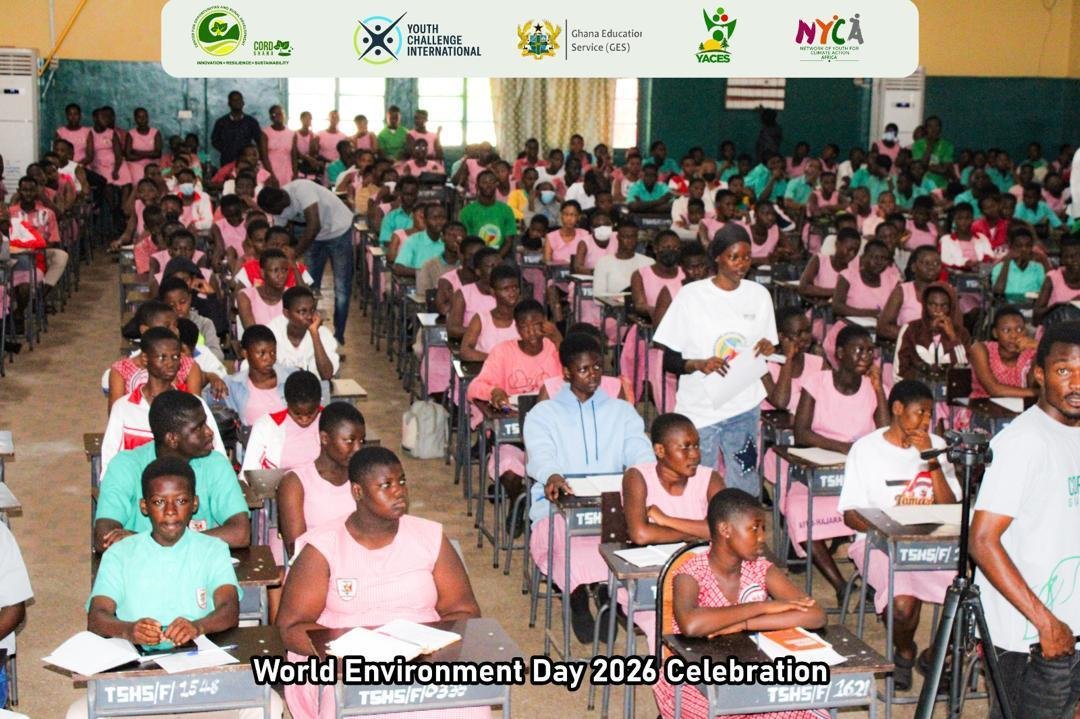
Tamale, June 5, – The Network of Youth for Climate Action Africa (NYCA Africa) in collaboration with Center for Opportunities in Rural Development (CORD Ghana), Youth Challenge International (YCI), the Ghana Education Service (GES), Youth Alliance for Climate and Environmental Sustainability (YACES), among others partners, has commemorated this year's World Environment Day in Tamale.
The celebration was intended to rally the support of young people, among other stakeholders to take concrete actions towards environmental protection and climate resilience.
The event brought together students, educators, development practitioners, and climate advocates to reflect on the importance of environmental conservation and youth-led climate action.
The celebration formed part of activities marking the global observance of World Environment Day, which seeks to raise awareness and inspire action to address environmental challenges and climate change.
Mr. Courage Kojo Opoku, Education and Capacity Building Coordinator of the Network of Youth for Climate Action Africa (NYCA Africa) highlighted the potential youth in Ghana and all over Africa have in Green Jobs when we have Environment and Climate Action discourse.
‘’Ghanaian Youth should be part of the Solutions and not the problem of continuous habits against nature. Youth have the mandate to lead change via every choice we take in our daily activities,” he said.
“He emphasized that youth should not see only UN Celebration days as days to show love to the environment, every day should be a day to promote nature-based solutions to enable the environment heal itself from the current state of emergency,” he added
Dr. Kodimah Siita, Executive Director of CORD Ghana, in his opening remarks, said the celebration was aimed at rekindling society's commitment to environmental stewardship and empowering young people to become agents of change.
He noted that the environment remained central to human survival and development and urged students to appreciate the responsibility they bore in preserving it for future generations.
"The earth we live on is borrowed from generations yet to come. It is therefore important that we protect and preserve it for them," he said.
Dr. Kodimah explained that CORD Ghana's decision to organize the event in schools was informed by its youth-centred approach to development, emphasizing that nurturing environmental consciousness among young people was critical to securing a sustainable future.
He said environmental challenges required practical solutions and collective action, adding that individuals' daily choices had significant impacts on the environment.
"We need to decisively create more solutions and practical actions that can help sustain and preserve the environment we live in," he said.
Ms. Olivia Sayani, Program and Partnership Fellow at Youth Challenge International, underscored the global nature of climate change and its far-reaching impacts on communities across continents.
Drawing from her experiences in Africa, Europe, and North America, she said climate-related disasters such as droughts, wildfires, and floods demonstrated that climate change transcended national borders and demanded collective solutions.
"The droughts affecting farmers worldwide, the wildfires I have experienced in my home country, Canada, and the floods affecting communities across Ghana are all connected realities of climate change," she said.
Ms. Sayani stressed that young people could no longer afford to view themselves merely as future leaders, adding that the climate crisis required them to assume leadership roles today.
She encouraged youth to move beyond awareness and actively contribute to climate action through community mobilisation, innovation, advocacy, and sustainable practices.
"The future is not something we wait for; it is something we create together today. Every action matters, whether large or small, local or global," she said.
Mr Salifu Abdul Razak, Sagnarigu Municipal Director of the Ghana Education Service, in his keynote address highlighted the significance of this year's World Environment Day theme, "Inspired by Nature, for Climate, for Our Future," describing it as a powerful reminder of society's collective responsibility towards environmental sustainability.
He noted that nature provided valuable lessons in patience, resilience, and teamwork, which schools could harness to shape environmentally conscious citizens.
He cited tree planting, school gardening, and waste recycling initiatives as practical avenues through which students could learn agriculture, science, entrepreneurship, and environmental responsibility simultaneously.
Mr Abdul Razak touched on climate change, saying its effects were already being felt within the education sector through rising temperatures, flooding, and prolonged dry seasons that disrupted learning and school feeding programmes.
He stressed that students should be viewed not only as victims of climate change but also as part of the solution.
"Every child who turns off a light, plants a tree, or adopts environmentally friendly practices is contributing to climate action," he said.
He disclosed that the Ghana Education Service was integrating climate action into school activities through green school initiatives to ensure that climate education extended beyond textbooks into everyday habits.
He challenged schools to become centres of climate restoration by establishing gardens, implementing waste segregation programmes, and participating in tree-planting campaigns.
"If we fail to protect our forests, water bodies, and soil today, what kind of future will we inherit?" he asked.
He pledged the commitment of the Ghana Education Service to continue working with CORD Ghana, Youth Challenge International, NYCA, and other stakeholders to make schools within the Greater Tamale Metropolis and surrounding communities' hubs for environmental action and climate education.
The event featured environmental awareness sessions and interactive engagements with students, who were encouraged to champion sustainable environmental practices within their schools and communities.
Participants expressed optimism that strengthening youth engagement in climate action would contribute significantly to building a resilient and sustainable future for Ghana and the world.
The celebration was intended to rally the support of young people, among other stakeholders to take concrete actions towards environmental protection and climate resilience.
The event brought together students, educators, development practitioners, and climate advocates to reflect on the importance of environmental conservation and youth-led climate action.
The celebration formed part of activities marking the global observance of World Environment Day, which seeks to raise awareness and inspire action to address environmental challenges and climate change.
Mr. Courage Kojo Opoku, Education and Capacity Building Coordinator of the Network of Youth for Climate Action Africa (NYCA Africa) highlighted the potential youth in Ghana and all over Africa have in Green Jobs when we have Environment and Climate Action discourse.
‘’Ghanaian Youth should be part of the Solutions and not the problem of continuous habits against nature. Youth have the mandate to lead change via every choice we take in our daily activities,” he said.
“He emphasized that youth should not see only UN Celebration days as days to show love to the environment, every day should be a day to promote nature-based solutions to enable the environment heal itself from the current state of emergency,” he added
Dr. Kodimah Siita, Executive Director of CORD Ghana, in his opening remarks, said the celebration was aimed at rekindling society's commitment to environmental stewardship and empowering young people to become agents of change.
He noted that the environment remained central to human survival and development and urged students to appreciate the responsibility they bore in preserving it for future generations.
"The earth we live on is borrowed from generations yet to come. It is therefore important that we protect and preserve it for them," he said.
Dr. Kodimah explained that CORD Ghana's decision to organize the event in schools was informed by its youth-centred approach to development, emphasizing that nurturing environmental consciousness among young people was critical to securing a sustainable future.
He said environmental challenges required practical solutions and collective action, adding that individuals' daily choices had significant impacts on the environment.
"We need to decisively create more solutions and practical actions that can help sustain and preserve the environment we live in," he said.
Ms. Olivia Sayani, Program and Partnership Fellow at Youth Challenge International, underscored the global nature of climate change and its far-reaching impacts on communities across continents.
Drawing from her experiences in Africa, Europe, and North America, she said climate-related disasters such as droughts, wildfires, and floods demonstrated that climate change transcended national borders and demanded collective solutions.
"The droughts affecting farmers worldwide, the wildfires I have experienced in my home country, Canada, and the floods affecting communities across Ghana are all connected realities of climate change," she said.
Ms. Sayani stressed that young people could no longer afford to view themselves merely as future leaders, adding that the climate crisis required them to assume leadership roles today.
She encouraged youth to move beyond awareness and actively contribute to climate action through community mobilisation, innovation, advocacy, and sustainable practices.
"The future is not something we wait for; it is something we create together today. Every action matters, whether large or small, local or global," she said.
Mr Salifu Abdul Razak, Sagnarigu Municipal Director of the Ghana Education Service, in his keynote address highlighted the significance of this year's World Environment Day theme, "Inspired by Nature, for Climate, for Our Future," describing it as a powerful reminder of society's collective responsibility towards environmental sustainability.
He noted that nature provided valuable lessons in patience, resilience, and teamwork, which schools could harness to shape environmentally conscious citizens.
He cited tree planting, school gardening, and waste recycling initiatives as practical avenues through which students could learn agriculture, science, entrepreneurship, and environmental responsibility simultaneously.
Mr Abdul Razak touched on climate change, saying its effects were already being felt within the education sector through rising temperatures, flooding, and prolonged dry seasons that disrupted learning and school feeding programmes.
He stressed that students should be viewed not only as victims of climate change but also as part of the solution.
"Every child who turns off a light, plants a tree, or adopts environmentally friendly practices is contributing to climate action," he said.
He disclosed that the Ghana Education Service was integrating climate action into school activities through green school initiatives to ensure that climate education extended beyond textbooks into everyday habits.
He challenged schools to become centres of climate restoration by establishing gardens, implementing waste segregation programmes, and participating in tree-planting campaigns.
"If we fail to protect our forests, water bodies, and soil today, what kind of future will we inherit?" he asked.
He pledged the commitment of the Ghana Education Service to continue working with CORD Ghana, Youth Challenge International, NYCA, and other stakeholders to make schools within the Greater Tamale Metropolis and surrounding communities' hubs for environmental action and climate education.
The event featured environmental awareness sessions and interactive engagements with students, who were encouraged to champion sustainable environmental practices within their schools and communities.
Participants expressed optimism that strengthening youth engagement in climate action would contribute significantly to building a resilient and sustainable future for Ghana and the world.